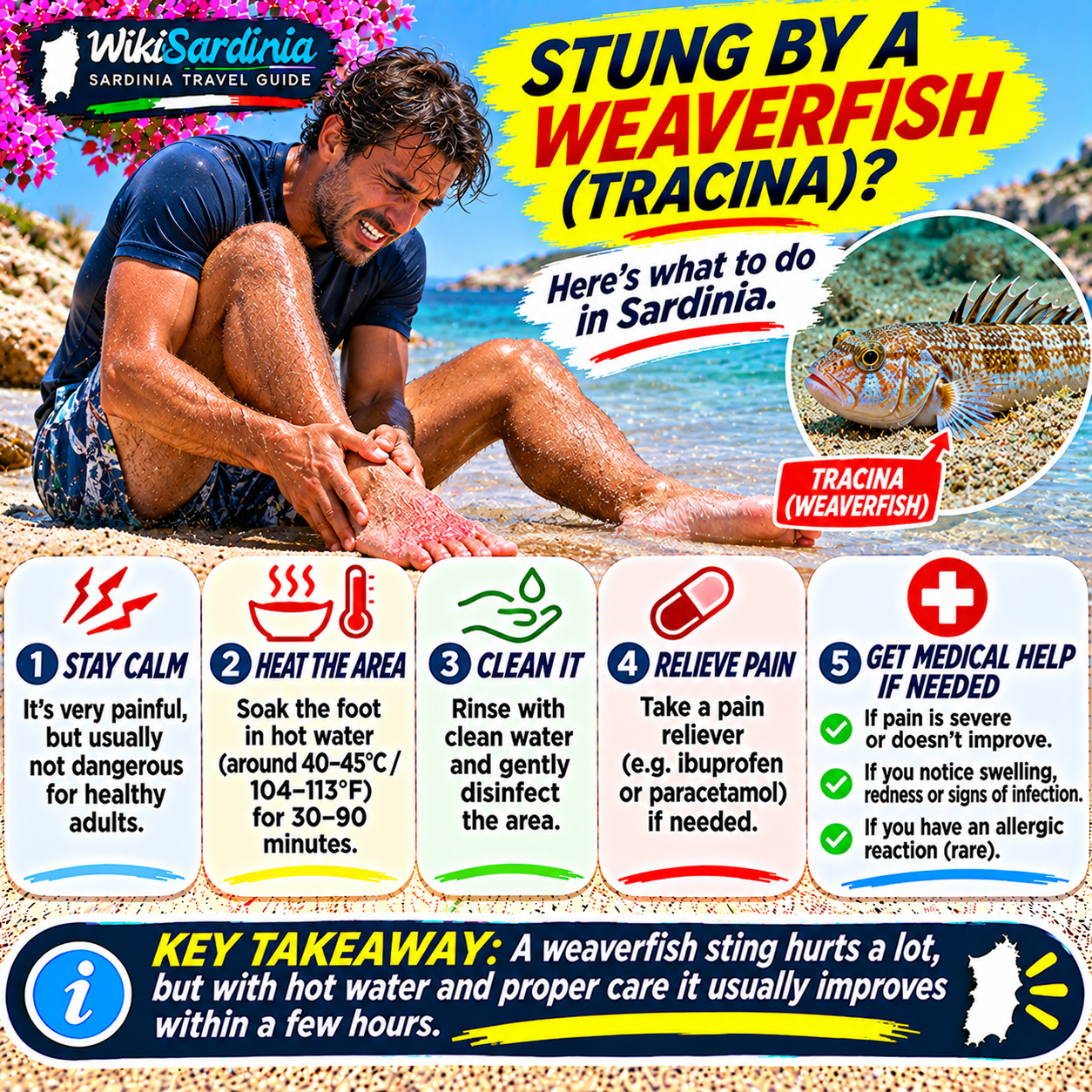
You're walking barefoot through shallow, sandy water on a Sardinian beach when you suddenly feel a sharp, burning pain in your foot. One possible cause is a sting from a tracina, the Italian name for a weeverfish. These small fish can bury themselves in sand, leaving venomous spines exposed. A sting can be extremely painful, but knowing what to do next can help reduce pain and prevent complications.
Leave the water safely, ask a lifeguard for help if one is present, and seek prompt medical advice. Hot-water immersion is a commonly recommended first-aid measure for weeverfish stings, but it must be done carefully to avoid burns. Do not cut the wound, attempt to suck out venom or dig into the skin looking for a spine.
What is a tracina?
A weeverfish is a small bottom-dwelling marine fish found in parts of the Mediterranean, including waters around Sardinia. It often rests partly buried in sand in shallow areas. Its dorsal and gill-cover spines can deliver venom when a person accidentally steps on or handles it. You may not see the fish before the sting, and the pain can begin suddenly.
What does a weeverfish sting feel like?
Typical symptoms include immediate intense pain, a puncture mark, redness and swelling around the affected area. Pain may spread beyond the puncture site. Some people also experience nausea, dizziness or other symptoms. The severity varies, and a painful foot injury in the sea is not automatically a weeverfish sting; other injuries can resemble it.
Step 1: Get out of the water and ask for help
Move to a safe place and avoid putting unnecessary weight on the injured foot. Ask the lifeguard or a nearby person for assistance. If you feel faint, sit or lie down. Do not continue swimming or walking into deeper water while in severe pain. For breathing difficulty, collapse, rapidly worsening systemic symptoms or signs of a serious allergic reaction, call 112 immediately.
Step 2: Use safely hot water to relieve pain
Immersing the affected area in hot water can help relieve pain after a weeverfish sting. First-aid guidance commonly describes water around 40–45 °C (104–113 °F) for approximately 30–90 minutes, or until pain improves, but the water must be comfortably tolerable and never scalding. Check the temperature carefully before immersion, especially for children or anyone with reduced temperature sensation, and avoid burns. If safe hot water is unavailable, seek medical assistance rather than improvising with dangerously hot liquids. Do not delay emergency care to continue soaking.
Step 3: Clean the puncture wound
Rinse the area with clean water and keep it protected from dirt. A clinician may need to inspect the wound for retained fragments of spine and assess whether further cleaning is required. Do not squeeze, cut or probe deeply into the puncture. If a fragment is embedded, let a healthcare professional assess removal rather than trying to dig it out yourself.
Step 4: Consider suitable pain relief
Hot-water immersion may reduce pain, but discomfort can persist. An over-the-counter pain reliever such as paracetamol (acetaminophen) or ibuprofen may be appropriate for some people when taken according to its label and individual medical circumstances. Ask a pharmacist or clinician if you are unsure about allergies, interactions or conditions that make these medicines unsuitable. Do not take a medication you have been advised to avoid.
Step 5: Get the wound assessed
Prompt medical assessment is advisable after a suspected venomous fish puncture, particularly if pain is severe, swelling increases, a spine may remain in the skin, or you have diabetes, impaired circulation or a weakened immune system. A clinician can evaluate the wound, advise on tetanus protection and identify complications. Seek urgent care for spreading redness, fever, discharge, worsening pain, numbness or other concerning changes.
What should I never do?
Do not apply a tourniquet, cut the wound, suck out venom or attempt to burn the skin. Avoid very hot water that could cause scalds. Do not assume the sting is harmless simply because the pain begins to settle. Avoid walking barefoot again until the injury is assessed and comfortable.
Can a weeverfish sting cause an allergic reaction?
Serious systemic reactions are uncommon but possible. Warning signs include difficulty breathing, swelling of the face or throat, collapse or severe dizziness. These require emergency care. In Italy, dial 112 for emergency assistance. Tell responders that you suspect a venomous marine fish sting and describe the symptoms.
How can I avoid stepping on a tracina?
Weeverfish can be difficult to spot because they hide in sand. In shallow sandy water, move carefully and consider suitable protective water shoes, although footwear does not guarantee protection from sharp spines. Avoid handling unfamiliar fish, even those washed ashore, because spines may remain hazardous. Follow any beach safety warnings and ask local lifeguards about known hazards.
Useful Italian phrases
“Mi ha punto una tracina.” means “A weeverfish stung me.” “Ho molto dolore al piede.” means “My foot hurts a lot.” “C'è un bagnino?” means “Is there a lifeguard?” “Dove posso ricevere assistenza medica?” means “Where can I get medical help?” And “Potrebbe esserci una spina nella ferita.” means “There might be a spine in the wound.”
The WikiSardinia takeaway
A tracina sting can cause intense pain even in shallow water. Leave the sea, seek help, use safely hot—not scalding—water for pain relief, clean the wound and arrange medical assessment. Call 112 immediately for severe allergic or systemic symptoms. A little preparation helps you respond calmly while enjoying Sardinia's beaches.