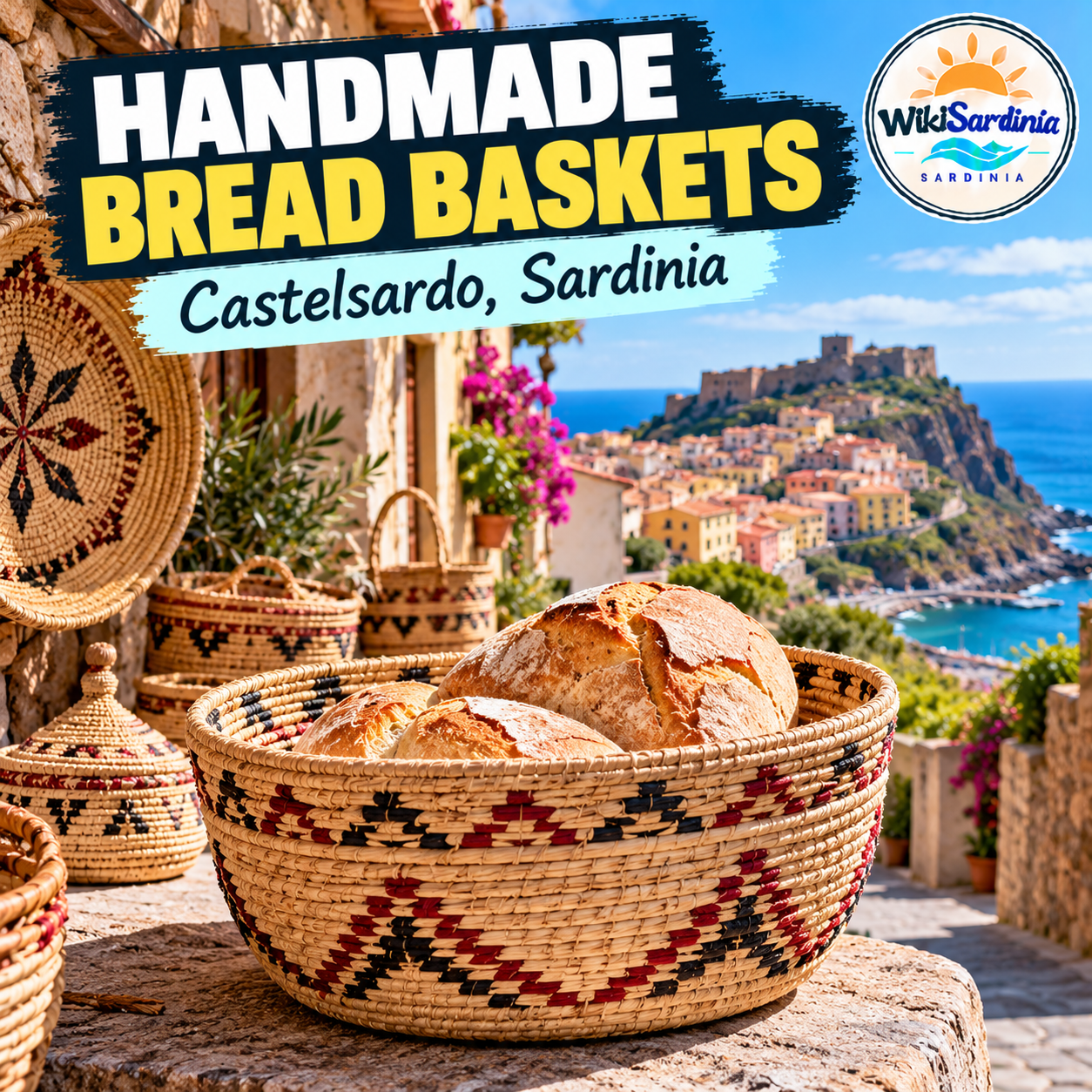
If you want a handmade bread basket as a practical souvenir from Sardinia, Castelsardo is one of the best places to start. This historic town on the north coast is renowned for its traditional basket-weaving craft, with local makers producing pieces that range from everyday containers to decorative works with distinctive patterns.
Why Castelsardo is famous for baskets
Basket weaving is part of Castelsardo’s living craft heritage. Traditional makers use natural fibres including Mediterranean dwarf palm and raffia, creating shapes and patterns passed down through generations. The town’s baskets are not all identical: the materials, weave, size and decoration can vary by artisan and by intended use.
For a bread basket, look for a sturdy, open form that fits your table and is easy to keep clean. If you plan to place bread directly inside, ask the maker whether the basket is suitable for food contact or whether you should use a clean cloth liner.
Where to look in Castelsardo
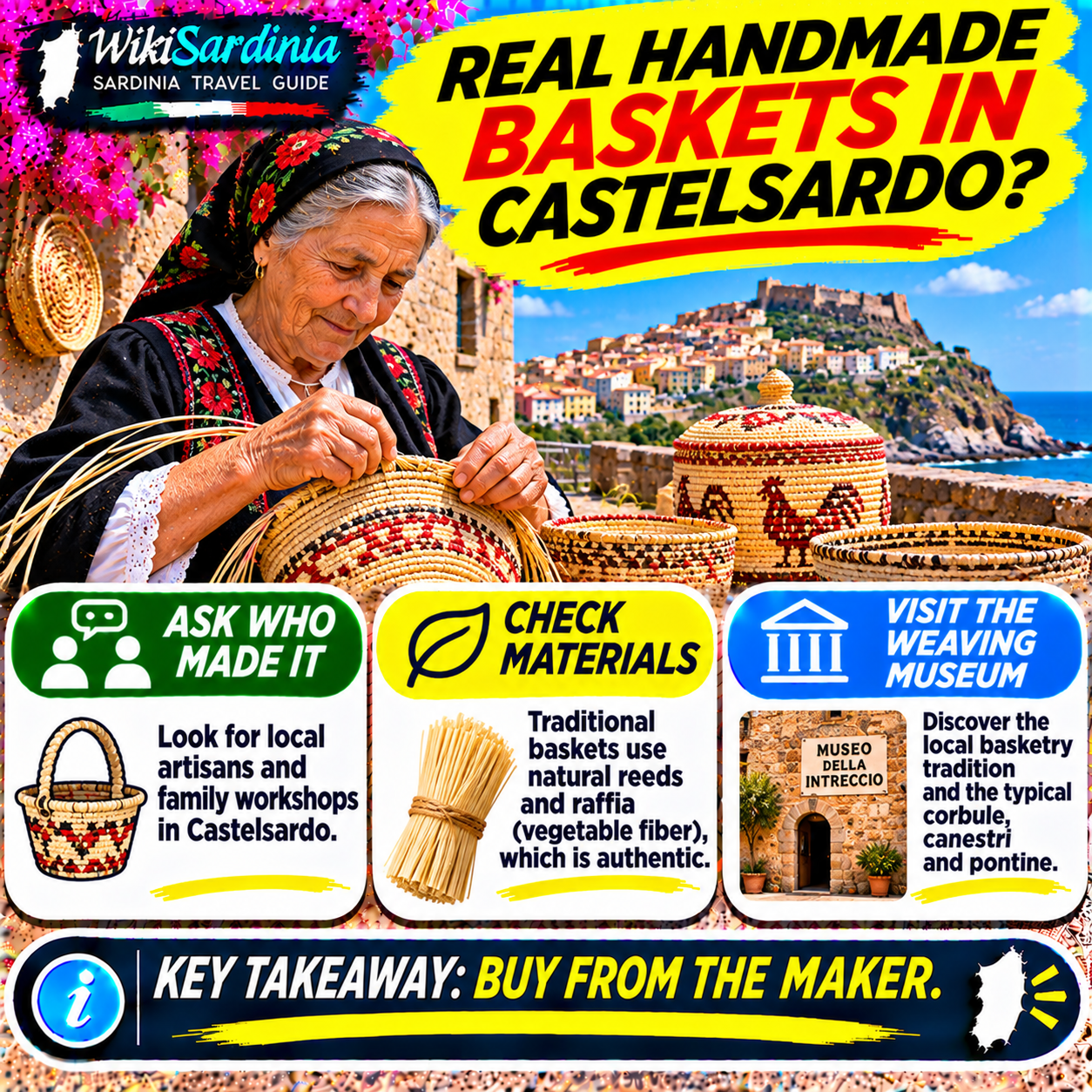
Start in the historic centre, where you may find craft shops and basket makers displaying their work. Some artisans have traditionally woven baskets near their doorways, and shops may carry both locally handmade pieces and other souvenirs. Ask who made the basket and where it was produced rather than assuming that every woven item sold in town is handmade locally.
A useful first stop is the Museo dell’Intreccio Mediterraneo, housed in the Doria Castle. The museum explains the materials, techniques and everyday uses of woven objects, including baskets and breadbaskets. It is an excellent way to understand the craft before choosing a piece to take home.
Check the museum’s official basketmaking information and its page on Castelsardo handiworks before visiting.
How to recognise a locally made basket
- Ask who made it: a genuine local artisan should be able to explain the maker or workshop.
- Ask about the material: traditional Castelsardo work often uses dwarf palm and raffia, although materials vary.
- Look closely at the weave: small variations can be normal in handmade work; perfect uniformity alone does not prove that an item is factory-made.
- Ask about its intended use: a decorative basket may not be designed for direct contact with food or frequent washing.
- Check the finish: inspect the rim, base and handles for secure weaving and a shape that sits steadily on the table.
What should you ask before buying?
These simple Italian questions can help:
- “È fatto a mano qui a Castelsardo?” — Is it handmade here in Castelsardo?
- “Quale materiale è stato usato?” — What material was used?
- “È adatto per metterci il pane direttamente?” — Is it suitable for putting bread directly inside?
- “Chi è l’artigiano che lo ha realizzato?” — Who is the artisan who made it?
Is Castelsardo the only place for Sardinian baskets?
No. Sardinia has several important basket-making centres, and each is associated with different materials and styles. Flussio and Tinnura are known for baskets made from asphodel, while Sinnai has a strong tradition of baskets made from rush and hay. If you are travelling around the island, these villages offer a different perspective on the craft.
The regional tourism portal’s guide to the art of weaving in Sardinia explains how materials and designs vary between communities.
A useful souvenir with a story
A handwoven bread basket from Castelsardo can be more than a decoration: it connects an everyday object with a long-standing Sardinian craft tradition. Visit the weaving museum to learn how the technique works, explore the historic streets and ask local sellers about the origin of each piece. Choosing a basket whose maker and materials can be explained helps support the craft—and gives you a better story to share when you bring it home.