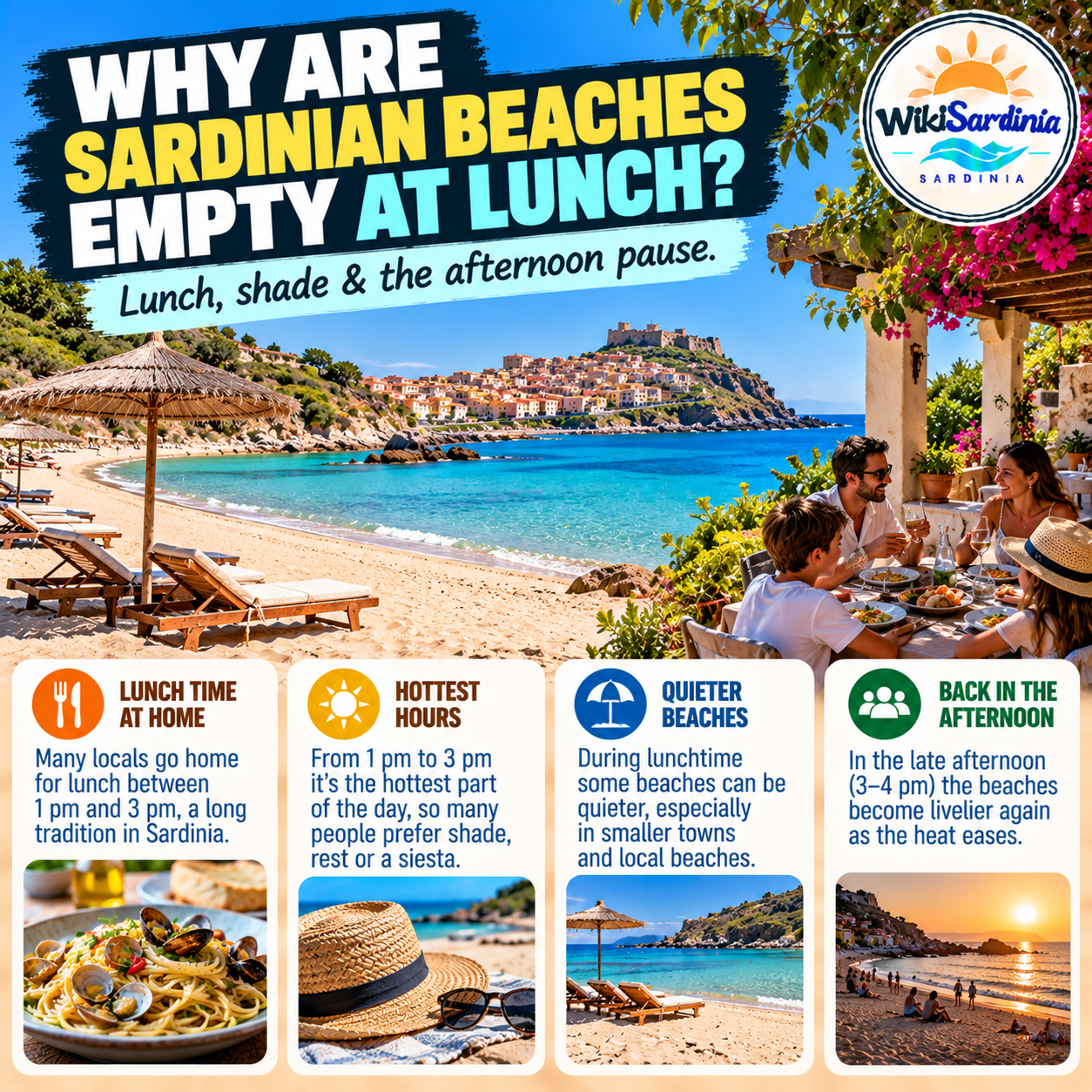
If you arrive at a Sardinian beach around lunchtime and notice more empty sunbeds or fewer local families, you may be seeing a familiar part of the island’s summer rhythm. In many communities, lunch is an important meal, and the hottest part of the day is a natural time to leave the sand, eat and rest. But the idea that every beach empties between 1 pm and 3 pm is an exaggeration: the pattern depends on the place, the season and the weather.
Lunch is more than a quick sandwich
For many Sardinian families, lunch can be a proper pause in the day rather than something eaten on the move. Some people return home, especially if they live nearby, while others eat at a bar, restaurant or beach kiosk. A long lunch with family or friends is part of everyday life in many parts of Italy, and it can help explain why some local beaches become quieter for a while.
The hottest hours make a difference
In July and August, the sun can be intense around midday and in the early afternoon. Leaving the beach for a shaded room, a meal or a rest is a practical way to avoid spending the hottest hours exposed to the sun. Some people use this time for a nap, often called a riposo or siesta, although not everyone follows the same routine.
For visitors, it is worth remembering that shade, water and sun protection matter even if the beach looks peaceful. The sea breeze can make the heat feel less intense than it really is.
Do Sardinians all go home between 1 pm and 3 pm?
No. There is no island-wide rule, and many people stay at the beach through lunch. Tourist resorts, beach clubs, restaurants and kiosks may remain open and busy. On famous beaches during peak season, the number of visitors can remain high all afternoon.
The quieter period is more noticeable in some local areas and on days when families choose to eat at home or take a break from the heat. It is better to think of it as a tendency in some places than a guaranteed empty-beach window.
When do beaches get lively again?
Later in the afternoon, the light softens and temperatures may become more comfortable. Some families return for another swim, while others come down for a walk or to watch the sunset. In summer, beaches can stay active well into the evening, especially near towns and holiday resorts.
How visitors can make the most of the day
- Go early: mornings are often pleasant for swimming and can be quieter at popular beaches.
- Plan lunch ahead: check whether nearby cafés and kiosks are open and whether you need to reserve a table.
- Take the heat seriously: use shade, drink water and avoid prolonged direct sun during the strongest hours.
- Try a late-afternoon swim: the light can be beautiful and the heat may be less intense.
- Be flexible: weekends, school holidays and famous beaches can be busy at any hour.
A local rhythm, not a strict rule
When a Sardinian beach seems unusually quiet at lunchtime, the explanation may be as simple as lunch, shade and a slower pace during the hottest part of the day. It is not that everyone disappears at exactly 1 pm. Watch how the particular beach changes, follow local opening hours and enjoy the island at a pace that suits you.
In short: some Sardinian beaches become quieter around lunch because people eat and rest during the hottest hours. Others stay busy, especially in high season. Arrive early or return later in the afternoon if you want a calmer swim, and always protect yourself from the sun.
Further reading: Destination Sardinia — local opening hours and the midday pause; Sardinia Trip — tips for avoiding beach crowds.